Independent Inventory Verification

Delivered as a managed service, providing continuous operational assurance without disruption.

RAWview operates alongside your existing Warehouse Management System to independently verify physical inventory accuracy.

Move beyond assumed inventory accuracy

Most warehouse operations rely on their Warehouse Management System (WMS) as the single source of truth for inventory. When a pallet is shown in a location, it is generally assumed to be correct unless a problem arises.

In reality, inventory accuracy degrades between stock verification events. Pallets are moved, missed, misplaced, or incorrectly recorded, and these discrepancies often go unnoticed until fulfilment failures, customer disputes, or operational escalations uncover them.

Traditional controls such as manual audits, cycle counts, and exception handling are widely used but are increasingly difficult to scale. They are periodic and resource intensive, particularly in high-bay environments where access and safety constraints apply.

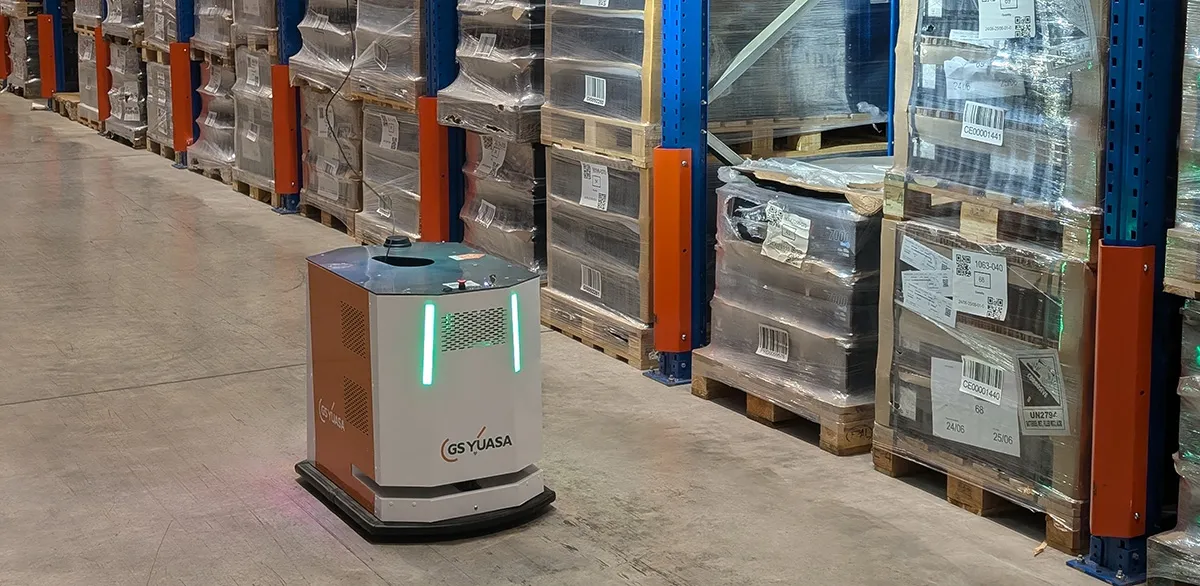
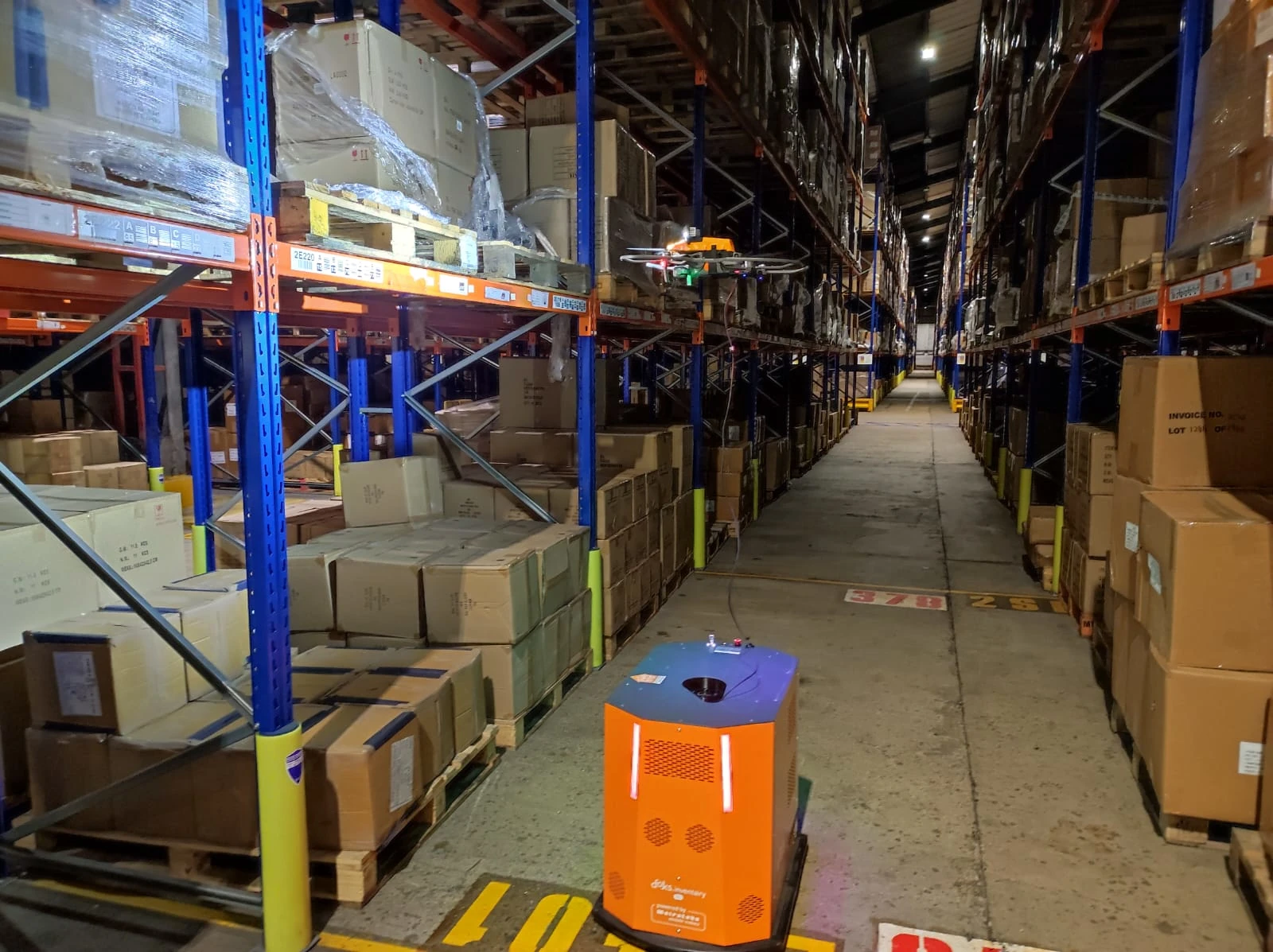
RAWview addresses this challenge by providing independent inventory verification as a managed service. Autonomous systems verify physical pallet locations alongside live warehouse operations, without disrupting day-to-day activity or adding operational burden to site teams.

The result is continuous operational assurance, with confidence that physical inventory matches system records and is supported by objective verification.

Operational across leading organisations

Support your internal business case in 5 minutes

Once operational risk and assurance requirements are understood, this tool can help quantify potential impact and support internal decision-making.

From Discovery to Live Verification
A structured approach to deploying independent inventory verification

Initial Discovery

  • We take time to understand your operation, stakeholders, and verification requirements.
  • Document current inventory control processes to establish a baseline for improvement.
  • Review real verification outputs and walk through the system interface your team will use.
Book a call

Feasibility Checks

  • Validate that the service is a good operational fit based on your environment and objectives.
  • Where requirements cannot be met reliably, this is identified early and discussed transparently.
  • Provide realistic expectations for verification coverage and throughput over time.

Proposal Call

  • Present a clear outline of service scope, responsibilities, and deliverables.
  • Confirm implementation approach, timelines, and success criteria.
  • Review commercial options and supporting financial analysis to aid internal decision-making.

Site Visit

  • Conduct an on-site demonstration in the live operating environment.
  • Allow stakeholders to observe verification in real conditions.
  • Agree measurable success criteria that will inform final approval.

Final Proposal

  • Incorporate feedback from the site visit and stakeholder review.
  • Finalise commercial terms and service scope.
  • Confirm implementation and service go-live.

Operational performance from live verification deployments

Observed verification accuracy

99.9

%
Continuous operating window

6

HOURS
Typical daily verification capacity

7500

LOCATIONS
Indicative payback timeframe

<12

MONTHS
Deliver consistent, repeatable verification coverage across thousands of locations per day as part of a managed service.
VIEW VERIFICATION CAPACITY ➤

Independent Inventory Verification
In Action

Case Studies
Logistics
Manufacturing
Case Studies
Logistics
Sustainability
Case Studies
Manufacturing

FAQs about Independent Inventory Verification

What is independent inventory verification?

Independent inventory verification is a managed service that provides objective confirmation that physical inventory matches system records within a warehouse environment.

The service operates alongside an existing Warehouse Management System, independently verifying pallet locations and identities without disrupting live operations or relying on manual stock counts.

The emphasis is on delivering consistent assurance over time, rather than replacing core systems or introducing additional operational workload for site teams.

How is inventory independently verified in live warehouse operations?

Verification is carried out by autonomously scanning pallet locations within the warehouse and comparing observed inventory positions against existing system records.

Verification tasks can be scheduled or run continuously alongside live operations, with results made available through a secure user interface or integrated directly into existing WMS or ERP systems.

RAWview remains responsible for system operation and verification delivery, allowing warehouse teams to focus on outcomes rather than managing the underlying technology.

What operational benefits does independent inventory verification provide?

The primary benefit is increased confidence in inventory accuracy through regular, repeatable verification of physical stock.

By reducing reliance on periodic manual counts, warehouses can minimise operational disruption, lower working-at-height exposure, and identify discrepancies earlier.

Over time, this leads to improved decision-making, better audit readiness, and reduced dependence on labour-intensive stocktake processes.

Where is independent inventory verification already in use?

Independent inventory verification is already deployed across a range of live warehouse environments, including 3PL, manufacturing, automotive, and distribution operations.

Organisations such as XPO Logistics, Princes Foods, PD Ports, Knowles Logistics, Kite Packaging, Charles Kendall Freight, Great Bear Distribution, and GS Yuasa use autonomous verification as part of their wider inventory control and assurance processes.

In each case, the objective is to improve confidence in inventory accuracy while maintaining operational continuity and minimising manual intervention.


How reliable is independent inventory verification in practice?

Independent inventory verification delivers a consistently high level of accuracy by objectively confirming physical inventory positions against system records.

Observed verification accuracy typically exceeds 99%, assuming standard barcode quality and site conditions. Where exceptions or unreadable labels are encountered, these are explicitly flagged rather than inferred, ensuring transparency rather than assumed correctness.

This approach improves confidence in inventory data without masking underlying data quality issues.

What verification outputs and reporting are provided?

Verification outputs include confirmed pallet locations, identified discrepancies, and supporting visual records, all accessible through a secure user interface or exportable for integration with existing systems.

Typical verification capacity allows a single system to cover several thousand locations per day, depending on site layout, operating windows, and label quality.

The focus is on delivering actionable verification results rather than raw scan volumes.

Is independent inventory verification safe to run alongside live warehouse operations?

Yes. Independent inventory verification is designed to operate safely alongside live warehouse activity without disrupting normal operations.

The system follows defined navigation paths, uses controlled operating behaviours, and adheres to established safety protocols. Verification tasks can be scheduled during operational or non-operational hours, depending on site preference.

This significantly reduces the need for working at height and manual intervention during routine stock verification.

Does the service integrate with existing WMS or ERP systems?

Yes. The service is designed to operate alongside existing Warehouse Management Systems rather than replace them.

Verification results can be reviewed independently or integrated into existing WMS or ERP platforms via standard data exports or APIs, allowing discrepancies to be identified and resolved within established workflows.

No changes to core systems are typically required.

What operational considerations are required to support the system?

The system is designed for continuous, repeatable operation within warehouse environments and includes an integrated charging and power management setup.

Battery technology and charging behaviour are managed as part of the service, requiring no specialist handling by site teams. Operational readiness and uptime are maintained by RAWview as part of the managed service.

How does independent inventory verification affect day-to-day warehouse workflows?

Independent inventory verification reduces reliance on manual stock counts and ad-hoc checking, allowing warehouse teams to focus on core operational activities.

Because verification can run alongside live operations, it avoids the disruption typically associated with traditional stocktakes and cycle counts.

Over time, this leads to more predictable workflows and reduced operational overhead.

How does independent inventory verification impact operational costs?

The primary objective of independent inventory verification is to improve confidence in inventory accuracy and reduce operational risk.

In many cases, this also leads to cost savings through reduced manual stocktake effort, lower disruption, and earlier identification of discrepancies. The financial impact varies by operation and is influenced by site size, verification frequency, and existing processes.

Where required, a supporting financial model can be used to quantify potential impact based on site-specific assumptions.

Are any changes required to existing warehouse infrastructure?

In most cases, no changes to existing warehouse infrastructure are required.

The system is designed to operate within standard racking layouts and aisle configurations using a preconfigured digital model of the site. Navigation, verification routes, and operating parameters are defined during implementation without requiring physical modification to racking, floors, or storage layouts.

Any site-specific considerations are assessed during feasibility to ensure suitability before deployment.

What types of facilities are suitable for independent inventory verification?

Independent inventory verification is suitable for warehouses and storage facilities that rely on palletised goods stored in racking.

This includes 3PL operations, manufacturing warehouses, distribution centres, and regulated storage environments where inventory accuracy and auditability are critical. Suitability depends on factors such as racking configuration, barcode standards, and access conditions, which are assessed during discovery.

Can verification operate under different lighting and operating conditions?

Yes. Verification can be performed under a range of lighting conditions, including low-light or out-of-hours environments.

Operating conditions are assessed during setup to ensure reliable capture and verification. Where environmental factors may affect performance, these are identified and accounted for as part of deployment planning.

How long does it typically take to deploy the service?

Typical deployments are completed within a short timeframe once feasibility and site readiness are confirmed.

The exact timeline depends on warehouse size, layout complexity, and operational requirements. Implementation is planned to minimise disruption and align with existing site operations.

Indicative timelines are provided following discovery and feasibility assessment.

How is the service supported and maintained over time?

The service is delivered as a managed solution, with system operation, monitoring, and ongoing support handled by RAWview.

This includes software updates, system health monitoring, and technical support as required. Site teams are not expected to manage or maintain the technology directly.

"Thanks to RAWview, we’ve been able to streamline our operations, reduce human error, and improve customer satisfaction. We’d highly recommend to any business looking to upgrade their stock control processes"
GS Yuasa
Finance & Operations, GS Yuasa
“One of the first companies in the UK to embrace drone technology, Kite Packaging has been optimising its warehouse through automated inventory control, showcasing an innovative approach both to its own operations and to customers"
Gavin Ashe
Managing Partner, Kite Packaging
Really impressed with this drone-based stock control system. Since working with RAWview, we have a fully automated audit of every one of our 16,000 pallet locations every 5 days. It used to take one person on a scissor lift 3-4 weeks to complete this task.
Roland Llewellin
Managing Director, Genpower
“The speed of our scanning time has improved well over 100%. It’s these kind of efficiency improvements that we feel is vital to future proofing our operation and ensure that we continuously meet the demands of our customers by staying ahead of the curve.”
Alex Knowles
Managing Director, Knowles Logistics
“The future of warehousing! What an amazing, well-engineered piece of technology that not only saves time and improves our team’s productivity, but also have a positive impact in regards to health and safety.”
Jonathan Borg
Stock Control and Systems Manager, PD Ports

Subscribe for our Newsletter for updates & innovation